The West Course Was Gone for a Decade. The Fairways Never Stopped Facing It.
August 20, 2026
August 20, 2026
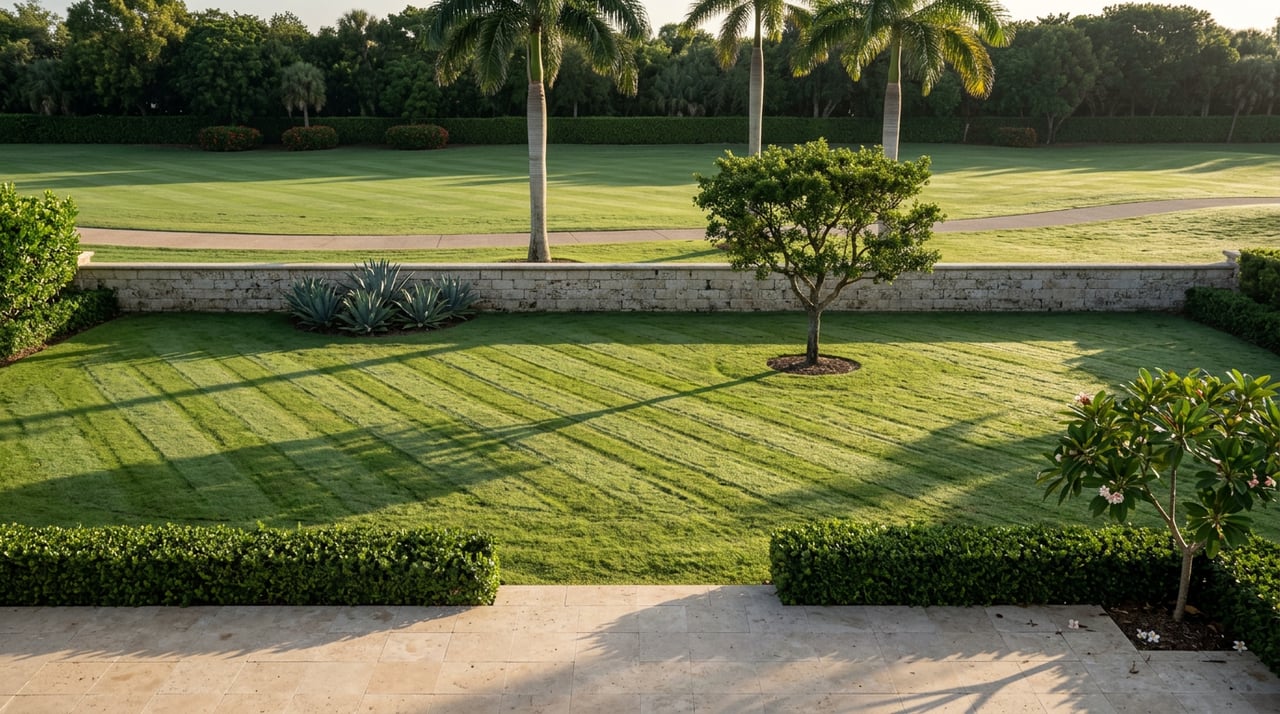
On a recent morning, a groundskeeping crew worked the front nine of the West Course before eight, cutting lines into grass that hadn't seen a mower on that kind of schedule in years. From a terrace in The Fairways, the sound alone was the news. For most of the past decade, a resident here could step outside and look at eighteen holes that weren't, in any functional sense, a golf course.
That's the part of this story that doesn't show up in resort brochures or golf write-ups, because it isn't about golf. It's about what it means to buy a home oriented entirely around a fairway that, for years, wasn't being played.
The Fairways sits as a small, gated enclave of villas with a straightforward premise: golf frontage, double security access, and a direct sightline to the West Course, one of the two original layouts Robert Trent Jones Sr. designed at Dorado Beach in 1958, alongside the East Course.
That premise held for decades. Then, in the spring of 2015, TPC Dorado Beach folded into the Tournament Players Club network and began marketing itself around two courses: the oceanside East and the inland Sugarcane. The West wasn't one of them. It quietly dropped out of the resort's active rotation, and one independent golf-course database went further, noting that the West had effectively been "retired" and flagging that it could be developed for residential housing and other non-golf uses.
That's the detail worth sitting with if you own a villa in The Fairways. For roughly ten years, the defining amenity of this specific community wasn't just underused. Its future as a golf course at all was genuinely in question.
That question was resolved on November 23, 2025, when the West Course came back online as a functioning 18-hole, par-72 layout, described by the resort as a parkland-style course with tree-lined fairways and gently rolling terrain, a deliberate contrast to the East's ocean-facing holes. Unlike the seaside course, the West runs inland, which is exactly what makes it visible and audible from a Fairways terrace in a way the East never was.
The difference between last November and this one isn't abstract. It shows up in specific, small ways:
None of that is dramatic on its own. Together, it's the difference between owning a home that faces a golf course and owning a home that faces a former one.
Part of what made the West's decade of dormancy so noticeable here specifically, rather than elsewhere on the resort, is scale. The Fairways is a small community, twenty-seven villas total, all oriented toward the same stretch of course and, in some cases, toward beach access beyond it. That's a tight ratio of homes to acreage. A larger neighborhood might have absorbed a closed course as background scenery. In The Fairways, the West wasn't scenery. It was the view every villa was built to have, and for years that view was standing in for something it wasn't.
Residents who bought in during that stretch, particularly those who moved in without ever having seen the West Course actually being played, effectively purchased golf frontage on faith. The course being idle wasn't a defect anyone disclosed as risk exactly, but it was a real unknown, one that a database entry from that period captured plainly: this land might become housing, not fairway.
It's worth noting what didn't come back, because it puts the West's return in context. Dorado Beach originally had four courses: East, West, and two others across the road, later renamed Sugarcane and Pineapple. The Pineapple course closed after Hurricane Maria caused significant damage in 2017 and has remained closed since. Nearly a decade later, it's still not part of any active rotation.
That's the version of events The Fairways could have gotten instead. A closed course at Dorado Beach doesn't automatically reopen. The West's return wasn't inevitable, it was a specific reversal of a specific decision, and it happened while a comparable course a short distance away stayed shuttered. For a neighborhood built entirely around one particular fairway, that distinction matters more than it would almost anywhere else on the property.
The West Course's return is the biggest shift in The Fairways' immediate surroundings, but it isn't the only thing on a seasonal clock right now. Spa Botánico is running a revised fall schedule this year, open daily from 12:30 p.m. to 7 p.m. from September 12 through November 11, with mornings held back for maintenance rather than treatments. A few minutes away, Flor de Sal is in its own seasonal pause, closed for the summer months and set to reopen in late November, almost exactly the same window in which the West Course made its return last year.
None of these are connected events. They're simply how this resort operates, certain things going dark for a season or a decade and coming back on a schedule that isn't always visible from the outside. For a Fairways resident, the West Course's decade-long version of that cycle just happened to be the one right outside the window.
If you bought your villa in The Fairways in the last two or three years, the West Course being active might just seem like the way things are. If you bought earlier, during the years when the fairway outside your terrace was closer to a field than a golf hole, this season reads differently. It's the neighborhood finally matching the name it was given.
That gap in experience, between what a longtime owner remembers and what a newer one assumes was always true, is a small thing. But it's the kind of detail that only shows up when you've actually watched a place change, rather than arrived after it already had.
If you're curious about how other pockets of Dorado Beach have shifted this year, or you want a read on a specific enclave before you spend more time in one, Island & Key tracks these changes as they happen, not as a footnote to a listing, but as the kind of local detail that actually shapes what it's like to live here.
Stay up to date on the latest real estate trends.

Where to Find Your Stretch of Sand on the North Coast.
Remodeling and Revamping Your Dorado Home to Match Coastal Island Living.
Your Step-by-Step Guide to Confidently Selling Your Home in Dorado.
Decor Ideas That Bring Out the Best in Dorado Real Estate.